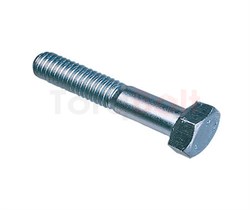
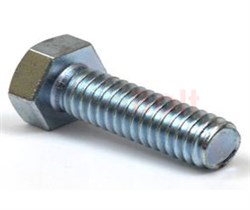
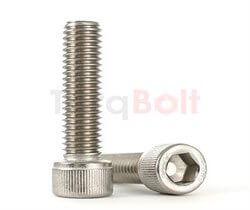
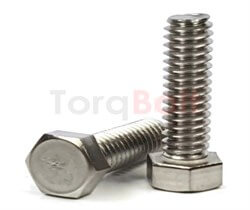
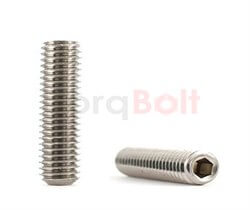
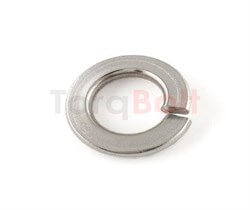
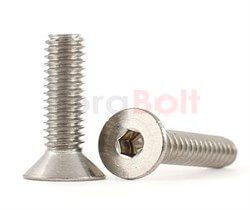
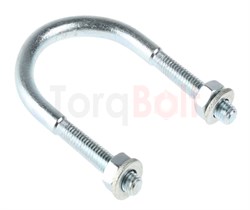
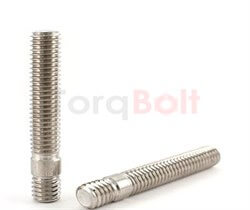
ASTM A453 Grade 660 is the A453/A453M grade for A286 (UNS S66286), a precipitation-hardened austenitic iron-based alloy used for high-temperature bolting such as bolts, screws, nuts and studs for pressure vessel and valve flanges (A453/A453M-17 1.1). Grade 660 has four classes, A, B, C and D, set by heat treatment (Table 4). Classes A, B and C need 130 ksi [895 MPa] tensile and 85 ksi [585 MPa] yield, and are stress-rupture tested at 1200 °F [650 °C] when the design temperature is above 800 °F [427 °C]. Class D needs 105 ksi [725 MPa] yield up to 2½ in. [63.5 mm] and 95 ksi [655 MPa] above, 35 HRC max, and is stamped NR because no stress-rupture test is required. API 20F covers Grade 660 Class D for BSL-2 and BSL-3 bolting, and its 35 HRC limit matches ISO 15156-3 (NACE MR0175) for S66286. TorqBolt supplies A453 Grade 660 bars, wire rod, forgings and fasteners.
ASTM A453 Grade 660 Temperature Rating
Physical Property
Intermittent Usage / Short Term
Continuous Operation
Fahrenheit(°F)
Celsius(°C)
Fahrenheit(°F)
Celsius(°C)
Oxidation Resistance
1500(°F)
815(°C)
1800(°F)
982(°C)
High Strength Retention
1300-1500(°F)
704-815(°C)
-320 upto 1000(°F)
-160 upto 537(°C)
Characteristics of A453 Grade 660
Good Machinability
Excellent fabrication characteristics
Good oxidation resistance up to 800°C
Can be produced by AOD refining or VIM
Good creep-rupture strength during extended high-temperature exposure
Non-magnetic even after severe cold deformation
High ductility in notched sections
Very high corrosion resistance
Good for moderate corrosion applications in aqueous solutions
High mechanical properties due to age hardenability
ASTM A453/A453M covers bolting materials for high-temperature service, such as bolts, screws, nuts and studs for pressure vessel and valve flanges. Grade 660 is UNS S66286, the A286 precipitation-hardened austenitic iron-based alloy, made in Class A, B, C or D.
What is the difference between ASTM A453 Grade 660 Class A, B, C and D?
The heat treatment (A453/A453M-17 Table 4). Class A is solution treated at 1650 °F [900 °C], Class B at 1800 °F [980 °C], both aged at 1325 °F [720 °C]. Class C is oil quenched from 1800 °F [980 °C] and double aged at 1425 °F [775 °C] and 1200 °F [650 °C]. Class D has the higher yield strength: 105 ksi [725 MPa] up to 2½ in. [63.5 mm] and 95 ksi [655 MPa] above, against 85 ksi [585 MPa] for Class A, B and C.
Which Grade 660 classes need a stress-rupture test?
Class A, B and C, when the design temperature is above 800 °F [427 °C]: 1200 °F [650 °C] at 56 ksi [385 MPa], 100 h minimum, 5 % minimum elongation (8.2.1, Table 6). Bolting not tested is stamped NR. Class D never needs the test and is always stamped NR.
Is SA-453 the same as ASTM A453?
For ASME Boiler and Pressure Vessel Code work, ASTM A453/A453M refers to the related specification SA-453 in Section II of the Code. SA-453 Grade 660 uses the same grade and class designations.
Can ASTM A453 Grade 660 be used in sour service (NACE MR0175)?
ISO 15156-3 (NACE MR0175) allows UNS S66286 up to 35 HRC in the solution-annealed and aged or double-aged condition. Class D is limited to 35 HRC by A453 Table 5; Class A, B and C allow up to 37 HRC, so hardness has to be controlled. API 6A 8.2.3.6 also cautions against Grade 660D in salt-air offshore service.
What are the equivalents of ASTM A453 Grade 660?
UNS S66286. ASTM A638 Grade 660 covers the same alloy as bars and forgings. EN 10269 lists it as 1.4980 (X6NiCrTiMoVB25-15-2), and EN 10088-1 Table A.1 gives JIS SUH660 as a comparable grade. These standards set their own heat treatment and property limits, so they are not class-for-class substitutes.
Where can I get the ASTM A453 PDF?
ASTM A453/A453M is copyrighted by ASTM International and sold at astm.org. This site does not host the standard; its data sheets for each class and product form are listed on the ASTM A453 Grade 660 PDF page.
Source: ASTM A453/A453M-17; ASTM A638/A638M; EN 10269; BS EN 10088-1; ISO 15156-3; API 6A; API 20F. Last reviewed .